

Average Cat Weight: What Your Pet Should Weigh

Average Cat Weight: What Your Pet Should Weigh
Cats are wonderful companions, and keeping them healthy is a top priority for every cat owner. One of the key indicators of your cat’s well-being is its weight. Understanding average cat weight helps you determine whether your feline friend is underweight, healthy, or carrying extra pounds that could affect their long-term health.
But what exactly is the average cat weight, and how does it vary by breed, age, and lifestyle? In this guide, we’ll cover everything from kitten growth patterns to adult maintenance, including tips to monitor your cat’s health and maintain an ideal weight. By the end, you’ll have a practical, informed approach to ensuring your cat stays fit, happy, and active.
Why Average Cat Weight Matters
Maintaining a healthy weight is crucial for your cat’s overall health. Cats that are too thin may suffer from nutritional deficiencies or underlying medical conditions, while overweight cats are at higher risk of diabetes, arthritis, and heart problems.
Knowing the average cat weight allows you to:
-
Identify health issues early
-
Adjust diet and exercise routines appropriately
-
Set realistic goals for growth in kittens
-
Prevent obesity-related illnesses in adult cats
Veterinarians often use weight as a starting point for health assessments, alongside body condition scores and physical examinations. Keeping your cat at a healthy weight contributes to a longer, more active life.
Average Cat Weight by Life Stage
Kittens (0–12 Months)
Kittens grow rapidly during their first year. At birth, a typical kitten weighs between 85–115 grams, and by 3 months, they may reach 1–1.5 kg.
Key considerations for kittens:
-
Frequent small meals support growth
-
Monitoring weight weekly helps detect growth issues
-
Consult a vet if weight gain is too slow or uneven
Young Adults (1–7 Years)
Once cats reach adulthood, their growth slows, and weight stabilizes. For most domestic cats, the average cat weight falls between 3.5–4.5 kg (7.7–9.9 lbs).
However, this varies based on breed, sex, and body structure:
-
Female cats are generally slightly smaller than males
-
Breeds like Maine Coons can weigh 6–8 kg, significantly higher than domestic short hairs
-
Indoor cats may weigh less than outdoor cats due to activity differences
Senior Cats (7+ Years)
As cats age, metabolism slows, and activity levels decrease. Seniors may gain weight if overfed or lose weight if suffering from health issues. Regular monitoring is crucial:
-
Older cats are prone to weight loss from kidney disease or dental problems
-
Maintaining an average cat weight helps prevent mobility and joint issues
-
Adjust portion sizes and diets to reflect activity levels
Average Cat Weight by Breed
Different breeds have different weight standards. Here’s a quick overview of common breeds:
| Breed | Average Weight | Notes |
|---|---|---|
| Domestic Shorthair | 3–4.5 kg | Most common household cat |
| Maine Coon | 6–8 kg | Large, muscular build |
| Siamese | 2.5–4 kg | Slim, active, elegant frame |
| Persian | 3–5 kg | Stocky, fluffy coat adds apparent bulk |
| Ragdoll | 4–6 kg | Large, relaxed breed, prone to weight gain |
Understanding these variations helps owners set realistic expectations and avoid unnecessary concern about weight differences.
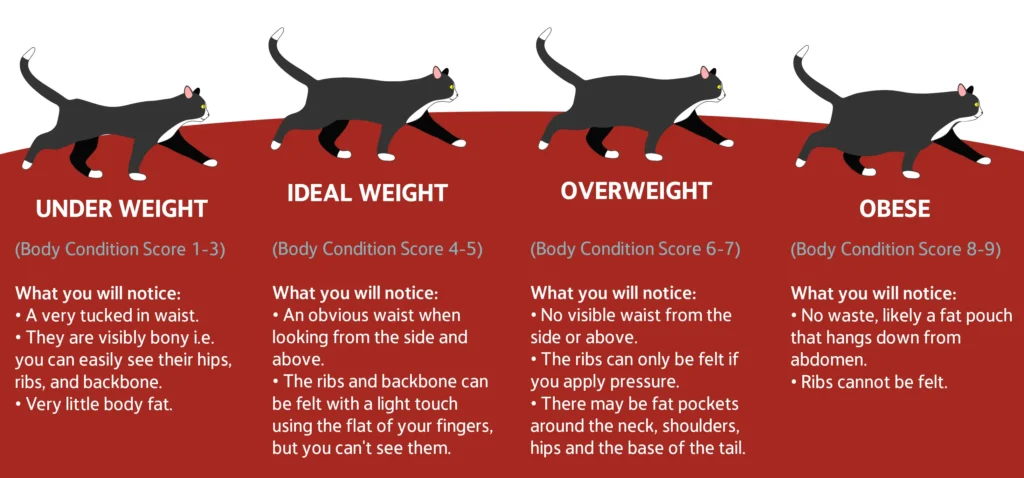
Signs Your Cat Is Overweight or Underweight
Overweight Cats
Indicators your cat may be overweight:
-
Difficulty feeling ribs under fur
-
Noticeable belly fat
-
Reduced mobility or reluctance to jump
-
Increased snoring or breathing issues
Underweight Cats
Indicators your cat may be underweight:
-
Visible spine, ribs, and hip bones
-
Lack of muscle mass
-
Poor coat condition
-
Lethargy or frequent illnesses
Regular weight checks and body condition scoring are simple ways to track your cat’s health without relying solely on the scale.
Tips to Maintain a Healthy Cat Weight
Balanced Diet
Feeding the right portion sizes and quality food is critical:
-
Use measured meals instead of free-feeding
-
Choose protein-rich, low-carb foods for weight control
-
Treats should be limited to 5–10% of daily calories
Exercise and Play
Activity keeps your cat fit and prevents obesity:
-
Interactive toys, laser pointers, and climbing towers encourage movement
-
Scheduled play sessions help burn calories and prevent boredom
-
Outdoor access (safely supervised) increases activity levels
Regular Vet Checkups
Routine veterinary visits ensure your cat stays at a healthy weight:
-
Annual checkups for adult cats
-
Biannual visits for senior cats
-
Discuss dietary adjustments and supplements with your vet
Common Questions About Average Cat Weight
How often should I weigh my cat?
Monthly weighing is usually sufficient for adult cats. Kittens may need weekly monitoring to track growth accurately.
Can indoor cats maintain a healthy weight?
Yes, but indoor cats may require more structured play and portion control to avoid obesity due to less natural activity.
Are there health risks linked to being overweight?
Overweight cats have higher risks of diabetes, liver disease, joint issues, and decreased lifespan. Maintaining the average cat weight mitigates these risks.
Can weight vary by season?
Some cats may gain a little weight in winter due to reduced activity, but significant changes should be discussed with a vet.
Tracking Your Cat’s Weight
Creating a simple weight log can help you monitor trends:
| Month | Weight (kg) | Notes |
|---|---|---|
| January | 4.0 | Healthy, active |
| February | 4.2 | Slight gain, adjust meals |
| March | 4.1 | Back to normal, increased play |
| April | 4.0 | Stable weight |
This visual record assists in detecting gradual weight changes that might otherwise go unnoticed.
Conclusion
Maintaining the average cat weight is essential for your feline friend’s health, happiness, and longevity. By understanding breed standards, life-stage requirements, and monitoring body condition, you can take proactive steps to keep your cat fit.
Remember, every cat is unique. What matters most is a combination of healthy weight, activity, and well-being. Regular vet checkups, balanced diets, and engaging play routines are the keys to ensuring your cat remains healthy and energetic.
Monitor, adjust, and enjoy the company of a happy, healthy cat, and you’ll find that keeping your feline at an ideal weight is simpler than it seems.
Have tips for keeping your cat healthy? Share your advice or experiences in the comments below to help fellow cat lovers maintain the perfect average cat weight for their pets.