

10 Black Inventors Behind Everyday Innovations

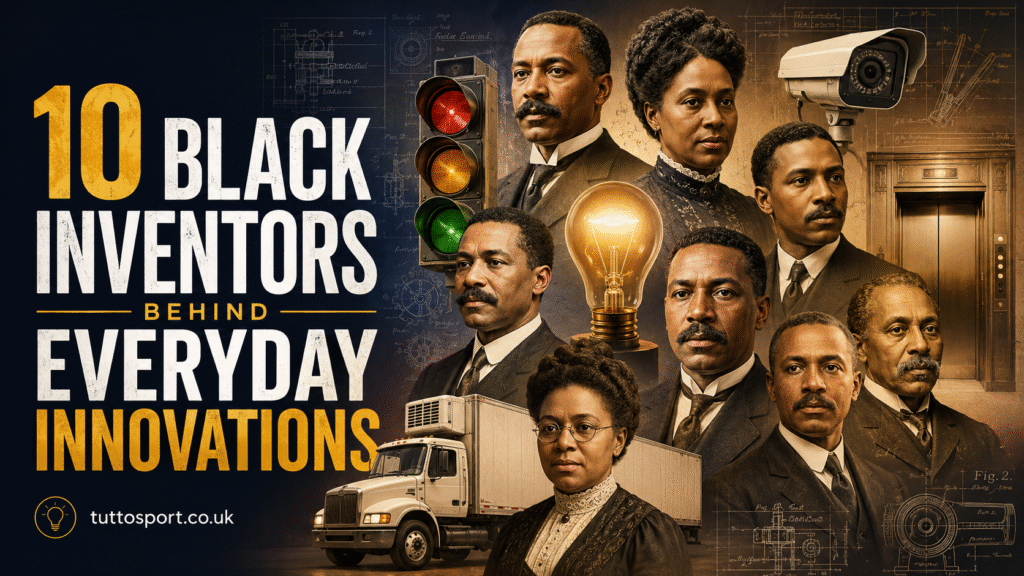
The Brilliant Minds Behind Things We Use Every Day
Some inventions feel so normal now that we barely stop to think about them. We wait at a traffic light. We ride in an elevator. We open the refrigerator. We check home security cameras. We use products, systems, tools, and ideas that make life safer, easier, faster, and more comfortable.
But behind many of these everyday innovations are Black Inventors whose names were not always placed at the front of the story.
That is the part that makes this topic so powerful. It is not just about history. It is about credit, creativity, persistence, and the kind of problem-solving that changes daily life. Many Black Inventors worked during times when racism, limited education access, unfair patent systems, and social barriers made success far harder than it should have been. Yet they still created. They still tested ideas. They still solved problems that others ignored.
This article takes a closer look at 10 Black Inventors behind everyday innovations. Some are well known. Others deserve far more attention. Together, their work reminds us that invention does not always begin in a fancy lab. Sometimes it begins with a problem at home, a danger on the street, a need in the workplace, or a simple question: how can this be better?
Why Black Inventors Matter in Everyday History
When people talk about invention, the same few names often appear. Thomas Edison. Alexander Graham Bell. Henry Ford. The list usually sounds familiar, almost automatic. However, the story of innovation is much bigger than that.
Black Inventors helped shape transportation, medicine, agriculture, safety, home life, beauty, food storage, communication, and technology. Their work touched ordinary people in ordinary places, which is exactly why it matters so much.
In addition, many African American innovators did not receive fair recognition during their lifetimes. Some had to fight for patents. Some had their ideas copied. Some were blocked from business opportunities because of discrimination. Even so, their contributions kept moving through the world.
Here is a quick look at the inventors covered in this article.
| Black Inventor | Known For | Everyday Impact |
|---|---|---|
| Garrett Morgan | Traffic signal, safety hood | Safer roads and emergency protection |
| Lewis Latimer | Electric lighting improvements | Better lighting systems |
| Marie Van Brittan Brown | Home security system | Modern home surveillance ideas |
| Sarah E. Goode | Folding cabinet bed | Space-saving furniture |
| Alexander Miles | Elevator door mechanism | Safer elevator use |
| Frederick McKinley Jones | Refrigerated transport | Safer food delivery |
| Madam C.J. Walker | Hair care business innovation | Beauty industry growth |
| George Washington Carver | Agricultural innovation | Farming and crop education |
| Otis Boykin | Electrical resistors | Electronics and medical devices |
| Patricia Bath | Laser cataract treatment | Vision-saving medical innovation |
1. Garrett Morgan and the Safer Traffic Signal
Garrett Morgan is one of the most important Black Inventors in American history because his work directly touched public safety. His improved traffic signal helped bring more order to busy roads at a time when cars, horses, bicycles, and pedestrians often shared crowded streets.
Before modern traffic systems, intersections could be chaotic. Drivers had fewer clear rules. Accidents were common. Morgan saw the danger and worked on a signal design that gave traffic a more controlled flow.
How His Idea Changed Daily Life
The traffic light is so common today that most people only notice it when they are late. Yet it is one of the most important safety tools in modern cities. Morgan’s work helped shape the idea that road safety could be designed, not just hoped for.
He also developed a safety hood, an early breathing device that helped protect people in dangerous conditions. That invention showed the same pattern found in many great Black Inventors: he noticed a real-life problem and built a practical solution.
Why Garrett Morgan Still Matters
Morgan’s story is powerful because he did not just invent for comfort. He invented for survival. His work helped save lives on roads and in emergency situations. That kind of invention deserves lasting respect.
2. Lewis Latimer and the Light That Lasted Longer
Lewis Latimer was a skilled draftsman, engineer, and inventor who made important contributions to electric lighting. While many people connect electric light mainly with Edison, Latimer’s work helped improve the carbon filament used in light bulbs, making them more practical and longer-lasting.
That matters because an invention is not only about the first idea. It is also about making the idea useful enough for everyday people.
Lighting Homes, Streets, and Workplaces
Imagine a world where light bulbs burned out quickly or were too expensive for common use. Latimer’s work helped move electric lighting closer to daily life. Better lighting changed how people worked, studied, traveled, and lived after dark.
Among Black Inventors, Latimer stands out because his technical skill helped support one of the biggest shifts in modern history: the move from gas lamps and candles to electric light.
More Than One Contribution
Latimer was also involved in patent drawings and engineering work connected to major inventions of his era. His life shows that innovation often needs more than one type of genius. It needs designers, builders, testers, and people who can turn rough concepts into working systems.
3. Marie Van Brittan Brown and Home Security
Marie Van Brittan Brown was a nurse living in Queens, New York. She often worked long hours, and she wanted a better way to feel safe at home. Instead of simply accepting fear as part of life, she created an early home security system with her husband, Albert Brown.
Her idea included features that sound very familiar today: a camera, a monitor, two-way communication, and a way to alert authorities.
The Beginning of Modern Home Surveillance
Today, people use smart doorbells, security cameras, intercoms, and phone-connected home systems. Brown’s invention helped lay the foundation for that world.
What makes her story especially interesting is how personal the invention was. She was not solving an abstract problem. She was responding to a real concern in her own life. That is often where the best inventions begin.
Why Her Work Feels So Modern
Among Black Inventors, Marie Van Brittan Brown feels incredibly ahead of her time. Her concept fits naturally into today’s smart-home culture. In many ways, she saw the future of home safety before the rest of the world caught up.
4. Sarah E. Goode and Space-Saving Furniture
Sarah E. Goode is often remembered for her folding cabinet bed, an invention designed to help people living in small spaces. Her idea was both simple and smart: furniture could serve more than one purpose.
During her time, many families lived in tight apartments where every inch mattered. A full bed could take up too much room during the day. Goode’s cabinet bed helped solve that problem by folding away when not in use.
A Practical Idea for Real Homes
This invention may sound familiar because modern furniture still uses the same basic thinking. Sofa beds, wall beds, folding desks, storage benches, and compact apartment furniture all follow the idea that space should work harder.
Goode’s work reminds us that Black Inventors were not only creating machines and industrial tools. They were also improving home life.
Why This Invention Still Connects Today
In cities where apartments are small and rent is high, space-saving furniture remains popular. That makes Goode’s idea feel timeless. She understood that good design is not always about luxury. Sometimes it is about making daily life easier.
5. Alexander Miles and Safer Elevator Doors
Elevators changed buildings forever. They made tall buildings more practical and helped shape modern cities. But early elevators had a serious safety issue: doors were not always automatic. If people forgot to close them properly, dangerous accidents could happen.
Alexander Miles developed an improved elevator door mechanism that helped make elevators safer and easier to use.
Safety Through Smart Design
Today, we step into elevators without thinking much about the doors. They open, they close, and we trust them. That trust is partly the result of inventors like Miles, who saw that safety should be built into the system.
This is a great example of how Black Inventors improved technology that millions of people now use every day.
The Everyday Impact
Every office tower, hotel, apartment building, hospital, and shopping center depends on elevators. A safer elevator system does not sound dramatic until you imagine life without it. Miles helped remove a real danger from a common experience.
6. Frederick McKinley Jones and Refrigerated Transport
Frederick McKinley Jones changed the way food and medicine could be moved. His work in mobile refrigeration helped make it possible to transport perishable goods over long distances.
Before reliable refrigerated transport, fresh food could spoil quickly. Medicines and other temperature-sensitive products were also harder to move safely.
Changing Food Supply Forever
Thanks to refrigerated trucks and transport systems, grocery stores can carry fresh produce, dairy, meat, frozen foods, and other goods from far away. Restaurants, hospitals, schools, and families all benefit from this kind of technology.
Jones is one of the Black Inventors whose impact is everywhere, even if people rarely say his name at the supermarket.
More Than Convenience
This was not just about comfort. Refrigerated transport helped reduce waste, improve food safety, and support supply chains. It also played an important role in moving medical supplies. That makes Jones’s invention one of the most practical and far-reaching on this list.
7. Madam C.J. Walker and Beauty Industry Innovation
Madam C.J. Walker is best known as a pioneering entrepreneur in hair care, but her contribution goes beyond products. She built a beauty business that created jobs, trained women, and served a market that mainstream companies often ignored.
Her work focused on hair care for Black women, and her business became a symbol of independence, confidence, and economic power.
Building More Than a Product
Walker understood something many brands still struggle with today: people want products made with their needs in mind. She listened to customers, created solutions, and built a trusted business around real experience.
While she is often discussed as a businesswoman, her place among Black Inventors and innovators is important because she helped transform the beauty industry.
Why Her Legacy Is Still Strong
Today’s beauty market is full of specialized hair care brands, natural hair products, scalp treatments, and beauty entrepreneurs. Walker helped open the door for that future. Her story is not only about invention. It is also about ownership, representation, and opportunity.
8. George Washington Carver and Agricultural Innovation
George Washington Carver is one of the most famous Black Inventors and scientists connected to agriculture. He studied crops, soil, and farming methods, and he encouraged farmers to use crop rotation to improve soil health.
He is often linked with peanuts, but his work was much broader than that. He researched many uses for crops such as peanuts, sweet potatoes, and soybeans.
Helping Farmers Think Differently
Carver’s work came at a time when many farmers in the South depended heavily on cotton. Over time, cotton farming damaged soil. Carver promoted alternative crops that could restore nutrients and create new economic possibilities.
His work helped farmers see that science could improve everyday agriculture.
A Legacy Rooted in Education
Carver was not only an inventor. He was also a teacher. He shared knowledge in a way that ordinary farmers could use. That is why his influence lasted. He made science practical, clear, and connected to real lives.
9. Otis Boykin and Electrical Resistors
Otis Boykin made important improvements in electrical resistor technology. Resistors help control the flow of electricity in circuits, which makes them essential in many electronic devices.
His work had applications in radios, computers, televisions, and medical equipment. One of the most meaningful connections often made to his work is its use in devices related to heart pacemakers.
Small Parts, Big Impact
A resistor is not something most people think about. It is hidden inside devices. Yet without reliable components, modern electronics would not function properly.
Boykin’s story is a reminder that not all important inventions are visible. Some of the most powerful ideas are inside the machines we depend on.
Why Boykin Deserves More Attention
Among Black Inventors, Boykin represents the hidden side of innovation. His work helped improve technology that supports communication, entertainment, computing, and health care. That is a huge legacy for something most people never see.
10. Patricia Bath and Vision-Saving Medical Innovation
Dr. Patricia Bath was an ophthalmologist, scientist, and inventor who developed a laser-based device for cataract treatment. Her work helped improve eye surgery and gave new hope to people suffering from vision loss.
She was also a strong advocate for better access to eye care, especially for communities that did not receive equal medical attention.
Medicine Meets Invention
Bath’s work shows how invention can be deeply human. Restoring sight is not just a medical achievement. It changes how a person reads, works, moves, recognizes loved ones, and experiences the world.
Her invention made her one of the most important Black Inventors in modern medical history.
A Powerful Example for Future Innovators
Dr. Bath’s story matters because she broke barriers in medicine while creating technology that helped patients. She proved that expertise, compassion, and invention can work together beautifully.
Common Traits Shared by Great Black Inventors
When you look closely at these stories, a pattern appears. These Black Inventors worked in different fields, but many shared the same qualities.
They noticed problems other people accepted as normal. They created practical solutions. They kept going despite unfair barriers. They understood that invention should help people live better.
Here are a few common traits that stand out:
- Curiosity about everyday problems
- Courage to challenge existing systems
- Practical thinking and hands-on testing
- Deep care for community needs
- Persistence in the face of racism and rejection
- A strong desire to make life safer, easier, or fairer
- Skill in turning simple observations into useful ideas
This is why their stories still feel fresh. They are not dusty history lessons. They are examples of problem-solving at its best.
How Black Inventors Changed Modern Life
The influence of Black Inventors reaches into almost every part of daily life. Their ideas helped shape homes, roads, hospitals, farms, beauty routines, buildings, electronics, and food systems.
When you stop at a traffic signal, Garrett Morgan’s influence is nearby. When you watch a home security camera, Marie Van Brittan Brown’s idea echoes through the technology. When fresh food travels across long distances, Frederick McKinley Jones’s work is part of that story. When a patient receives advanced eye care, Patricia Bath’s legacy matters.
In addition, these inventions helped future generations imagine what was possible. Representation matters in science and technology. When young people learn about Black Inventors, they see that innovation has never belonged to one race, one class, or one background.
That lesson is valuable for schools, families, businesses, and anyone interested in progress.
Why These Stories Are Often Overlooked
Many Black Inventors did not receive the same attention as white inventors during their time. Racism played a major role. Limited media coverage, unequal education, and restricted business opportunities made it harder for Black innovators to become household names.
In some cases, their work was recognized late. In others, it was simplified or reduced to a short mention during Black History Month. However, these stories deserve attention all year.
History becomes more honest when it includes everyone who helped build it. It also becomes more inspiring. The story of invention is not a straight line led by a few famous men. It is a wide, rich, complicated story full of people who solved problems in workshops, kitchens, farms, hospitals, offices, and neighborhoods.
What We Can Learn from Black Inventors Today
The lives of Black Inventors teach more than facts. They teach mindset.
First, they show that innovation begins with observation. Each inventor noticed something that could be improved. Second, they show that useful ideas often come from personal experience. Marie Van Brittan Brown wanted safety. Sarah E. Goode understood small living spaces. George Washington Carver wanted farmers to improve their land.
Moreover, their stories show that barriers do not erase brilliance. Many of these inventors faced discrimination, but their ideas still changed the world.
For today’s readers, students, writers, business owners, and creators, the lesson is simple: do not ignore everyday problems. They may be the beginning of something important.
Conclusion: Black Inventors Deserve a Bigger Place in History
Black Inventors have shaped everyday life in ways many people never realize. They helped make roads safer, homes more secure, elevators more reliable, food transport more efficient, farms more productive, electronics more useful, and medical care more advanced.
Their inventions were not just clever. They were practical, human, and often born from real need. That is what makes their work so powerful.
The next time you use a traffic light, step into an elevator, turn on a light, open your fridge, or check a home security camera, remember that innovation has many faces. Some of the brightest belong to Black Inventors whose stories deserve to be told with respect, accuracy, and pride.
If this article helped you discover a name you did not know before, share it with someone else. Better yet, leave a comment with the Black inventor whose story inspires you most. History becomes stronger when more people help keep it alive.