

Life, Music, and Legacy Explained

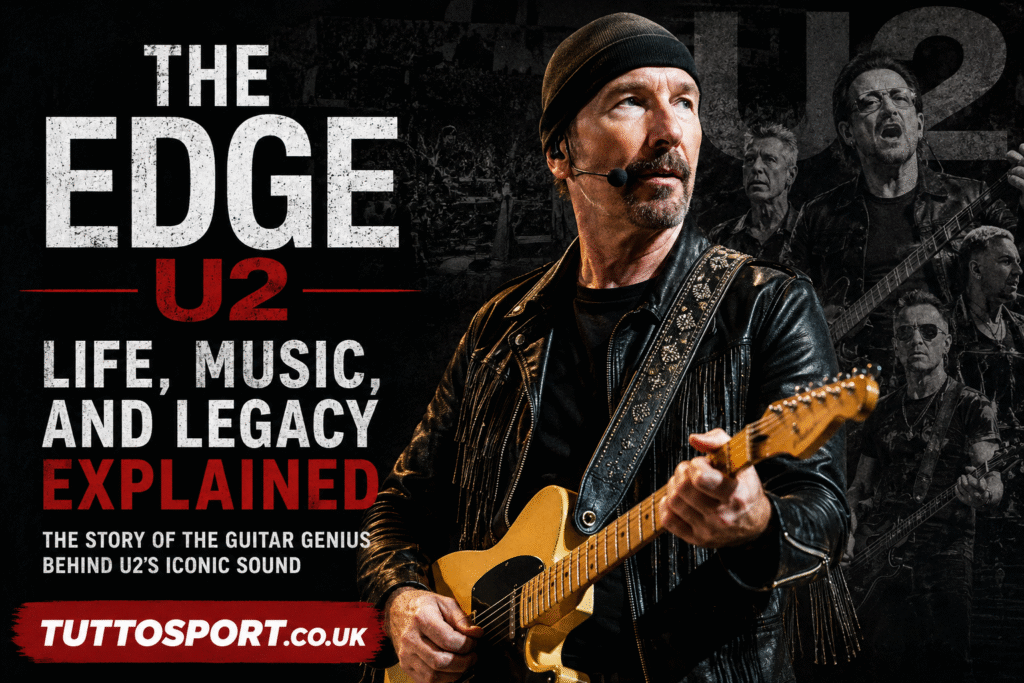
The Quiet Genius Behind U2’s Sound
Some musicians become famous because they stand in the spotlight. Others become unforgettable because they shape the sound that lives in people’s hearts for decades. The Edge, the legendary guitarist of U2, belongs to the second group. He is not the loudest personality in the band, and he has never relied on flashy guitar solos just to prove a point. Instead, he built a sound so distinct that fans can recognize it within seconds.
When people talk about Life, Music, and Legacy, The Edge is a name that deserves serious attention. His story is not just about being the guitarist in one of the biggest rock bands in the world. It is about imagination, discipline, faith in sound, and the courage to create something different when rock music already seemed full of guitar heroes.
Born as David Howell Evans, The Edge helped turn U2 from a group of Dublin schoolboys into a global rock force. His ringing guitar tones, delay effects, sharp rhythm work, and emotional textures became part of U2’s identity. Songs like “Where the Streets Have No Name,” “With or Without You,” “Sunday Bloody Sunday,” “Pride,” and “I Still Haven’t Found What I’m Looking For” are not just famous tracks. They are cultural moments.
This article explores The Edge U2 story in full detail. We will look at his early life, music journey, signature guitar style, greatest achievements, personal influence, and the powerful Life, Music, and Legacy that continues to inspire artists around the world.
BIO: The Edge U2 Quick Facts
| Detail | Information |
|---|---|
| Full Name | David Howell Evans |
| Date of Birth | August 8, 1961 |
| Age | 64 years old |
| Profession | Musician, guitarist, songwriter, keyboardist, backing vocalist |
| Nationality | British-born, Irish citizen |
| Net Worth (approx.) | Around $400 million |
| Notable Works / Achievements | U2 guitarist, 15 studio albums with U2, Grammy-winning musician, Rock and Roll Hall of Fame inductee, co-creator of U2’s signature sound |
Early Life: From England to Ireland
The Edge was born in England, but his story is deeply tied to Ireland. His family moved to Dublin when he was young, and that move shaped much of his identity. Dublin became the place where his creativity grew, where his friendships formed, and where the roots of U2 began.
As a child, David Evans was not someone who seemed desperate for fame. He was thoughtful, curious, and interested in how things worked. That detail matters because it explains a lot about his later guitar style. The Edge never played like someone chasing attention. He played like someone building architecture with sound.
His early interest in music developed during a time when rock was changing fast. Punk energy, post-punk experimentation, classic rock power, and new wave atmosphere were all moving through the air. Young musicians were not only learning chords; they were learning that attitude and originality could matter just as much as technical perfection.
The Edge’s Life, Music, and Legacy started in a very human way. He was a young man with a guitar, a growing imagination, and a group of friends who believed they could become something more than ordinary.
How The Edge Became Part of U2
U2 began in Dublin in 1976 after Larry Mullen Jr. posted a notice looking for musicians. That small school notice changed rock history. The band that formed included Bono, The Edge, Adam Clayton, and Larry Mullen Jr. At the time, none of them knew they would become one of the most influential bands in modern music.
The early version of U2 was raw, passionate, and still searching for its sound. Bono brought emotional vocals and big ideas. Larry added steady, marching drums. Adam gave the band a strong bass foundation. The Edge brought something unusual: space.
While many guitarists filled every second with notes, The Edge understood the power of leaving room. His playing allowed songs to breathe. He used echo, delay, rhythm, and texture to create atmosphere. This approach became one of the most important parts of U2’s identity.
That is why any honest discussion of Life, Music, and Legacy must place The Edge at the center of U2’s success. He did not simply play guitar in the band. He helped invent the emotional landscape that made U2 sound like U2.
The Meaning Behind the Name “The Edge”
Stage names can sometimes feel forced, but “The Edge” fits David Evans perfectly. The name suggests sharpness, focus, and a certain mystery. It also reflects the way he plays guitar. His sound often feels like it is cutting through fog, clean and bright, yet full of feeling.
Unlike many rock stars, The Edge never built his image around chaos or ego. He became known for being calm, controlled, intelligent, and deeply focused on music. His beanie hat, quiet presence, and thoughtful interviews made him stand apart from louder celebrity figures.
In many ways, the name “The Edge” became more than a nickname. It became a symbol of his artistic personality. He always seemed to stand at the edge of tradition and innovation, using familiar instruments in fresh ways.
The Signature Guitar Sound That Changed Rock
Why His Playing Feels So Different
The Edge’s guitar style is often described as simple, but that word can be misleading. His playing may not be overloaded with fast notes, but it is far from basic. It requires timing, taste, control, and a deep understanding of sound design.
He is famous for using delay effects, which create repeated echoes of guitar notes. In the hands of an average player, delay can sound messy. In The Edge’s hands, it becomes rhythm, mood, and movement.
This is where his genius shows. He turns one note into a wave. He turns a chord into a landscape. He turns silence into tension.
Key Features of The Edge’s Guitar Style
- Chiming guitar tones
- Rhythmic delay effects
- Clean, bright sound textures
- Minimal but emotional note choices
- Strong use of atmosphere
- Repeated patterns that build tension
- A balance of melody and rhythm
- Guitar parts that support the song, not the ego
This approach helped redefine what a rock guitarist could be. He proved that guitar did not always need to dominate a song. Sometimes it could lift the song, surround it, and give it emotional depth.
The Life, Music, and Legacy of The Edge is closely tied to this idea. He made restraint powerful. He made atmosphere heroic.
U2’s Rise to Global Fame
U2’s journey from Dublin clubs to stadiums around the world did not happen overnight. The band worked hard, toured heavily, and built a connection with fans through emotional honesty and bold music.
Albums like “Boy,” “October,” and “War” introduced U2 as a band with passion and purpose. “Sunday Bloody Sunday” showed that they were willing to address serious political and social themes. The Edge’s guitar on that track is sharp, urgent, and unforgettable. It does not simply decorate the song. It drives the message forward.
Then came “The Joshua Tree,” one of the most important albums in rock history. This album pushed U2 into a new level of global recognition. The Edge’s playing on tracks like “Where the Streets Have No Name” and “With or Without You” became iconic. These songs showed how sound could feel spiritual, cinematic, and deeply personal all at once.
The Edge’s Life, Music, and Legacy became linked with songs that people played at weddings, protests, road trips, memorials, and private moments of reflection. That is rare. Very few guitarists create sounds that become part of people’s real lives.
The Edge as a Songwriter
It is easy to focus only on his guitar playing, but The Edge is also an important songwriter. U2 songs are built through collaboration, and his musical ideas often shape the direction of the band’s work.
His strength as a songwriter lies in structure and emotional tone. He knows how to build a song slowly. He understands when to hold back and when to open the sound wide. His guitar lines often become hooks, even when they are not traditional melodies.
Think of “I Still Haven’t Found What I’m Looking For.” The song feels simple on the surface, but its emotional pull is huge. That is part of U2’s magic. The music feels open enough for listeners to place their own stories inside it.
The Edge’s songwriting style supports big themes: faith, doubt, love, conflict, hope, loss, and searching. These themes are central to the broader Life, Music, and Legacy of U2.
Best-Known Songs Featuring The Edge’s Impact
| Song | Why It Matters |
|---|---|
| Where the Streets Have No Name | Famous for its rising guitar intro and spiritual energy |
| With or Without You | Shows his ability to create emotion through restraint |
| Sunday Bloody Sunday | Features urgent, military-like guitar energy |
| Pride | A powerful anthem with bright, driving guitar work |
| I Still Haven’t Found What I’m Looking For | Blends gospel feeling with atmospheric rock |
| Beautiful Day | Modern U2 optimism with shining guitar textures |
| One | Emotional simplicity with deep musical maturity |
| New Year’s Day | Combines political feeling with memorable guitar atmosphere |
These songs prove that The Edge is not just a skilled musician. He is a mood-maker. He gives songs a sense of place, purpose, and emotional color.
Life Beyond the Stage
The Edge has lived much of his life in public, yet he has managed to keep a sense of privacy and dignity. That is not easy when you are part of a band as famous as U2.
He has been involved in charity work, humanitarian causes, and music-related support projects. One of his best-known efforts includes helping musicians affected by disasters through Music Rising, a campaign connected to restoring instruments and supporting music culture after major loss.
This side of his story matters because Life, Music, and Legacy is not only about albums and awards. It is also about what a person does with influence. The Edge has often used his platform in ways that support creativity, recovery, and community.
The Edge and Bono: A Creative Partnership
U2’s success is often discussed through the voice of Bono, but The Edge’s partnership with Bono is one of the great creative relationships in rock. Bono brings emotional fire, big themes, and a powerful public voice. The Edge brings structure, sound, mood, and musical identity.
Together, they balance each other. Bono reaches outward. The Edge builds the sonic world around that reach. This partnership has helped U2 remain relevant across decades.
Their creative bond is not based on one person overpowering the other. Instead, it works because each understands what the other brings. That kind of trust is rare in music, especially in a band that has stayed together for so long.
Awards, Recognition, and Achievements
U2’s list of achievements is long, and The Edge has been central to that success. The band has won major music awards, sold millions of records, filled stadiums, and influenced several generations of musicians.
However, awards only tell part of the story. The deeper achievement is cultural staying power. Many bands become famous for a few years and then fade. U2 has remained part of global music conversation for decades.
The Edge’s Life, Music, and Legacy is visible in the way younger guitarists still study his tone. Producers admire his use of space. Songwriters learn from his discipline. Fans continue to connect with the emotional honesty of U2’s music.
Why The Edge’s Guitar Style Still Matters
Music trends change quickly. Sounds that feel fresh one decade can feel dated in the next. Yet The Edge’s guitar style has aged well because it was never built only on fashion.
His sound is based on feeling, clarity, and identity. He did not try to be the fastest guitarist. He tried to be memorable. That choice made all the difference.
Today, many modern rock, indie, worship, alternative, and stadium bands use guitar textures that owe something to The Edge. You can hear his influence in shimmering delay sounds, atmospheric builds, and emotional guitar patterns.
The Life, Music, and Legacy of The Edge continues because his ideas still work. They still move people. They still teach musicians that one well-placed note can matter more than twenty unnecessary ones.
The Edge’s Influence on Modern Guitarists
A Different Kind of Guitar Hero
In classic rock, guitar heroes were often judged by speed, solos, and stage presence. The Edge changed that idea. He showed that a guitarist could be a designer of sound.
He became a hero for players who cared about tone, mood, and arrangement. His style encouraged musicians to think beyond the fretboard. Effects pedals, amplifiers, timing, and silence became part of the instrument.
What Musicians Can Learn from The Edge
- Serve the song before serving your ego
- Build a recognizable sound
- Use effects with purpose
- Leave space for emotion
- Focus on timing and texture
- Create parts people remember
- Stay curious even after success
This is one of the most useful lessons from his Life, Music, and Legacy. Greatness is not always about doing more. Sometimes it is about choosing better.
The Human Side of His Success
Behind every famous musician is a human being dealing with pressure, change, criticism, and expectation. The Edge has spent most of his adult life inside one of the world’s biggest bands. That kind of career brings excitement, but it also brings weight.
What makes him interesting is how steady he has remained. He comes across as thoughtful rather than dramatic. He seems more interested in improving the music than chasing attention. In an industry full of noise, that calm focus feels refreshing.
His story reminds readers that success does not always need to look loud. It can be patient. It can be careful. It can be built through years of showing up, experimenting, and staying loyal to the work.
Life, Music, and Legacy: Why This Story Still Connects
The phrase Life, Music, and Legacy fits The Edge because his journey has three strong layers.
First, there is life: a young boy who moved to Ireland, found friendship through music, and became part of something much larger than himself.
Second, there is music: the guitar tones, studio ideas, songwriting choices, and performances that helped define U2’s sound.
Third, there is legacy: the influence he leaves on fans, artists, producers, and modern rock culture.
The Edge’s Life, Music, and Legacy is not only about fame. It is about identity. He found a voice through guitar and used it to help create songs that crossed countries, languages, and generations.
Common Questions About The Edge U2
What is The Edge’s real name?
The Edge’s real name is David Howell Evans. He became widely known by his stage name through his work with U2.
What is The Edge famous for?
He is best known as the lead guitarist, keyboardist, backing vocalist, and songwriter for U2. His delay-based guitar sound helped shape the band’s signature style.
Why is The Edge’s guitar style unique?
His guitar style is unique because he uses rhythm, echo, space, and atmosphere instead of relying only on fast solos. His playing often feels cinematic and emotional.
Is The Edge still part of U2?
Yes, The Edge remains closely associated with U2 and continues to be recognized as a founding member and key creative force in the band.
What is The Edge’s approximate net worth?
His net worth is commonly estimated at around $400 million, though celebrity wealth figures are always approximate.
The Legacy of The Edge in Rock History
Rock history is full of guitarists who changed the instrument. Some changed it through speed. Some changed it through distortion. Some changed it through blues feeling or technical skill. The Edge changed it through atmosphere.
He made the guitar sound wide, bright, searching, and spiritual. He turned technology into emotion. He proved that effects pedals could do more than decorate sound; they could become part of songwriting itself.
The Edge’s Life, Music, and Legacy also shows the value of staying original. He did not become great by copying the loudest players of his time. He became great by finding his own lane and staying committed to it.
That is why his influence remains strong. His work still feels modern because it was never only about fashion. It was about feeling.
Conclusion: Why The Edge’s Story Still Matters
The Edge U2 story is one of creativity, patience, and quiet power. He is not the kind of musician who needed to dominate every stage moment to prove his worth. Instead, he helped build one of the most recognizable sounds in rock history through taste, vision, and emotional intelligence.
His Life, Music, and Legacy show that true influence is not always loud. Sometimes it rings out through a single guitar note, repeated with perfect timing, echoing into a stadium full of people. Sometimes it appears in the space between sounds. Sometimes it lives in songs that fans carry with them for years.
From his early days in Dublin to U2’s global success, The Edge has remained a rare kind of artist: thoughtful, inventive, and deeply connected to the music. His journey proves that originality still matters. It also proves that a musician does not need to follow every trend to leave a lasting mark.
The Edge’s Life, Music, and Legacy will continue to inspire guitarists, songwriters, and fans who believe music can be both simple and profound. If his story teaches us anything, it is this: find your sound, trust it, and let it speak honestly.
If you enjoyed this deep look at The Edge and U2, share it with another music fan or leave your thoughts about your favorite U2 song.