
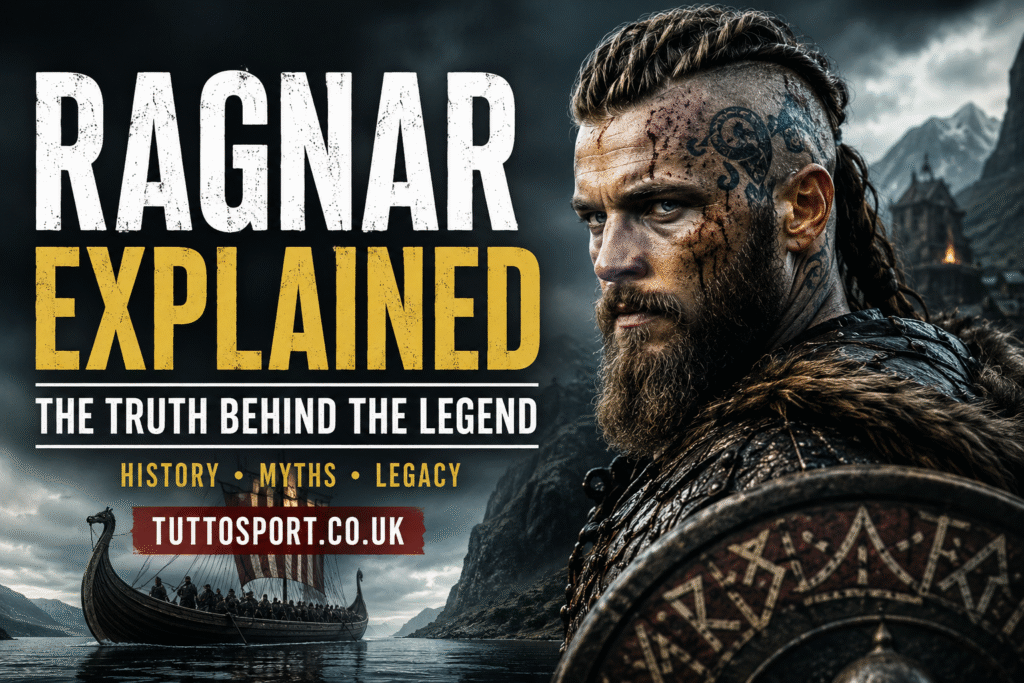
Ragnar Explained: The Truth Behind the Legend

Why Ragnar Still Feels Larger Than Life
Some names fade with time. Others become louder.
Ragnar is one of those names that refuses to disappear. Say it once, and you can almost hear the crash of wooden shields, the roar of the sea, and the whisper of old Norse stories told beside a fire. But here is the interesting part: Ragnar was never just a warrior. He became a symbol. A name wrapped in history, legend, family drama, revenge, kingship, and mystery.
That is why Ragnar Explained is such a fascinating topic. People want to know one simple thing: was Ragnar real, or was he only a myth? The answer is not as clean as most readers expect. Ragnar Lothbrok, sometimes spelled Lodbrok, sits in that strange space between recorded history and heroic storytelling. He appears in sagas, poems, medieval chronicles, and modern pop culture. Yet, when historians look closely, they find a story that may be part truth, part legend, and part memory of several Viking leaders blended into one unforgettable figure.
In this article, Ragnar Explained means more than just repeating famous stories. It means looking at who Ragnar may have been, why his legend grew, what made him important, and why his name still pulls readers, history fans, and TV audiences into the Viking world today.
Ragnar Bio: Quick Facts About the Legendary Viking
| Detail | Information |
|---|---|
| Full Name | Ragnar Lothbrok / Ragnar Lodbrok |
| Date of Birth | Unknown, often placed around the 8th or 9th century in legend |
| Age | Unknown |
| Profession | Viking warrior, raider, legendary king, saga hero |
| Nationality | Norse / Scandinavian |
| Net Worth (approx.) | Not applicable, as he belongs to the medieval and legendary period |
| Notable Works / Achievements | Viking raids, legendary battles, saga fame, father of famous Viking sons, major figure in Norse legend |
Ragnar Explained: Who Was Ragnar Lothbrok?
The most common version of Ragnar describes him as a legendary Viking warrior and king. He is often linked with Denmark, Sweden, and other parts of Scandinavia. In the old stories, he is brave, clever, fearless, and sometimes reckless. He fights monsters, defeats kings, wins famous women, and raises sons who become powerful Viking leaders.
However, Ragnar Explained properly requires honesty. Historians cannot confirm every part of his life. Some believe Ragnar was based on a real Viking leader. Others believe he was a mix of several real men from the Viking Age. A few details may come from actual raids and rulers, while other parts clearly belong to legend.
This does not make Ragnar less important. In fact, it makes him more interesting.
Many historical figures are remembered through documents. Ragnar is remembered through imagination, storytelling, and cultural memory. He became the kind of figure people used to explain bravery, ambition, revenge, family honor, and the dangerous beauty of the Viking Age.
The Meaning Behind the Name Ragnar Lothbrok
The name Ragnar is powerful on its own. It has a strong Norse feel and is often connected with warrior culture. The second part, Lothbrok or Lodbrok, is usually translated in a way that points to “hairy breeches” or “shaggy trousers.”
That may sound unusual today, but the nickname comes from a famous legend. According to one story, Ragnar wore special protective trousers when he fought a giant serpent. These clothes helped protect him from poison and danger. After that, the nickname stuck.
This is one reason Ragnar Explained always includes both history and myth. Even his name carries a story. It does not simply identify him. It turns him into a character people can remember.
Was Ragnar a Real Person?
This is the question everyone asks first.
The best answer is: maybe, but not exactly as the legends describe him.
There may have been a real Viking leader named Ragnar. Some medieval texts mention a figure similar to him. Also, several Viking raids connected to his legend match the kind of events that happened during the 9th century. Norse warriors did attack England, France, and other parts of Europe. They sailed in longships, targeted wealthy towns, and challenged powerful kingdoms.
However, the full legendary Ragnar seems too large for one ordinary life. His stories include heroic feats, dramatic romances, impossible victories, and a death scene that feels almost designed for poetry. Because of this, many experts think Ragnar became a “legendary container” for several Viking stories.
So, when we say Ragnar Explained, we should not force him into a simple box. He may be partly real, partly symbolic, and partly created by generations of storytellers.
Ragnar in Norse Sagas and Medieval Stories
Ragnar appears in different medieval sources, especially Norse sagas and legendary tales. These works were often written down long after the events they describe. That matters because stories change over time.
A tale told by a warrior becomes bigger when told by his grandson. Then it becomes even bigger when written by a poet. After a few hundred years, the man may become almost superhuman.
In these stories, Ragnar is not just a raider. He is a hero with a dramatic life. He wins battles, marries remarkable women, fathers famous sons, and dies in a way that inspires revenge. His world includes kings, warriors, shields, ships, gods, omens, and honor.
That is why Ragnar Explained must respect the sagas as cultural treasures, even if they are not perfect history books. They show how medieval Scandinavians imagined greatness.
The Famous Women in Ragnar’s Legend
Ragnar’s story is also shaped by the women connected to him. In many versions, his relationships are not small details. They help define his rise, his family, and his legacy.
Lagertha
Lagertha is one of the most famous names linked with Ragnar today. She is often described as a shieldmaiden, a female warrior with courage and strength. In legend, she fights with skill and stands as more than just a romantic figure. She represents independence, bravery, and battle wisdom.
Thora
Thora appears in the serpent story. Ragnar wins her after defeating a dangerous snake or dragon-like creature. This tale gives us the famous image of Ragnar wearing protective clothing, which helps explain the nickname Lothbrok.
Aslaug
Aslaug is another major figure in Ragnar’s legend. She is often described as wise, mysterious, and connected to heroic bloodlines. In some stories, she becomes the mother of several of Ragnar’s famous sons.
These women add depth to the legend. They also show that Viking stories were not only about raids and weapons. They were about family lines, loyalty, pride, love, and destiny.
Ragnar’s Sons and Their Huge Importance
One reason Ragnar’s name stayed alive is because of his sons. In many traditions, his children become even more historically important than he is.
Some of the most famous sons linked to Ragnar include:
- Ivar the Boneless
- Bjorn Ironside
- Sigurd Snake-in-the-Eye
- Ubba
- Hvitserk
These names appear across different stories and historical traditions. Some are linked with real Viking activity in England and beyond. The sons of Ragnar are often shown as fierce, strategic, and hungry for revenge, especially after their father’s legendary death.
In many ways, Ragnar Explained is also a story about legacy. Ragnar’s power does not end with him. It continues through his family, their battles, and the fear their names created across Europe.
The Death of Ragnar: Snake Pit and Revenge
Perhaps the most famous part of Ragnar’s legend is his death.
According to the story, Ragnar is captured by King Ælla of Northumbria. Instead of dying in an ordinary battle, Ragnar is thrown into a pit of snakes. Even in death, he remains proud. He speaks of how his sons will avenge him. This moment turns his death into a spark.
The revenge that follows is central to the legend. Ragnar’s sons gather forces and attack England. Their anger becomes a force of history and myth. Whether every detail is true or not, the story is unforgettable.
This death scene is one of the biggest reasons Ragnar Explained continues to attract readers. It has everything a lasting legend needs: betrayal, courage, pain, family loyalty, and revenge.
Ragnar Explained Through the Viking Age
To understand Ragnar, we need to understand the Viking Age itself.
The Viking Age was a period when Norse seafarers traveled far beyond Scandinavia. They raided, traded, settled, explored, and sometimes ruled. Their longships gave them speed. Their navigation skills gave them reach. Their warrior culture gave them fearsome reputations.
However, Vikings were not only raiders. They were also farmers, traders, craftsmen, explorers, and settlers. They built communities, formed alliances, and influenced large parts of Europe.
Ragnar represents the dramatic side of that age. He stands for the warrior king, the sea raider, the bold adventurer, and the man who refuses to live quietly. Through him, readers can enter the larger world of Norse culture, longships, runes, battle honor, family pride, and medieval politics.
Why Ragnar Became a Legend
Legends do not survive by accident. They survive because people keep finding meaning in them.
Ragnar became legendary for several reasons:
- His story is easy to remember.
- His life feels dramatic and cinematic.
- His family legacy is powerful.
- His death creates emotional impact.
- His name connects with real Viking history.
- His character can be seen as both heroic and flawed.
- His legend mixes adventure, danger, love, and revenge.
Moreover, Ragnar is not perfect. That makes him more human. He can be brave, but also proud. He can be wise, but also impulsive. He seeks glory, yet that same hunger leads him into danger. Readers connect with that tension.
A perfect hero can feel flat. Ragnar does not.
Ragnar in Modern Pop Culture
Modern audiences know Ragnar largely because of TV, books, games, and online history content. In recent years, his name has become strongly linked with Viking-themed entertainment. These modern versions often take creative freedom, adding emotions, relationships, and dramatic scenes that may not come directly from old sources.
Still, pop culture has helped introduce Ragnar to millions of people. Many viewers first discover him through a screen, then become curious about the real history behind the legend. That is a good thing, as long as readers understand the difference between entertainment and historical study.
This is where Ragnar Explained becomes useful. It helps separate the man, the myth, the saga figure, and the modern character.
Ragnar Explained: Myth vs. History
Here is a simple way to understand the difference:
| Topic | Legendary Version | Historical View |
|---|---|---|
| Identity | A great Viking king and hero | Possibly based on one or more real Viking leaders |
| Family | Father of several famous sons | Some sons may be linked to real Viking figures |
| Death | Thrown into a snake pit by King Ælla | Dramatic but difficult to prove |
| Achievements | Many heroic battles and victories | Some events may reflect real Viking raids |
| Legacy | Symbol of Viking courage and revenge | Important as cultural memory and saga tradition |
This table makes Ragnar Explained easier to grasp. The legend may not be fully factual, but it still tells us a lot about the values and fears of the Viking world.
What Ragnar Teaches Us About Leadership
Ragnar’s story is not only about swords and ships. It also offers lessons about leadership.
He shows the power of courage. He takes risks when others hesitate. He also shows the danger of pride. His ambition pushes him forward, but it can also blind him. That balance makes his story useful even today.
Lessons from Ragnar’s legend include:
- A bold vision can inspire people.
- Reputation matters in leadership.
- Family legacy can shape history.
- Pride can become dangerous.
- Strategy is just as important as strength.
- A leader’s story can outlive the leader.
In addition, Ragnar’s legend reminds us that leaders are often remembered not only for what they did, but for how people talk about them after they are gone.
Why Readers Still Search for Ragnar Explained
People search for Ragnar Explained because the story feels unfinished. There is mystery in it. Was he real? Did he truly die in a snake pit? Were his sons historical? Did he raid Paris? Was he a king, a warrior, or a myth?
These questions keep the legend alive.
Another reason is emotional. Ragnar’s story touches themes that still matter today: ambition, fatherhood, loyalty, courage, betrayal, and the price of fame. Even though the setting is medieval, the emotions feel familiar.
A man wants greatness. A family wants honor. Enemies want revenge. A name becomes larger than life.
That is timeless storytelling.
The Symbolism of Ragnar
Ragnar is more than a character. He is a symbol of the Viking imagination.
He represents:
- The call of adventure
- The danger of ambition
- The strength of family bonds
- The hunger for glory
- The fearlessness of seafaring warriors
- The thin line between history and legend
When people discuss Ragnar, they are often discussing what the Viking Age means to them. For some, it means freedom. For others, it means violence and conquest. For many, it means a world that feels raw, dangerous, and deeply human.
This is why Ragnar Explained is not only a history topic. It is also a cultural topic.
Common Myths About Ragnar
Because Ragnar is so famous, many myths surround him. Some are old, while others come from modern entertainment.
Myth 1: Everything About Ragnar Is Proven
This is not true. Many parts of his life are uncertain. The legend is rich, but the historical record is limited.
Myth 2: Ragnar Was Only a TV Character
Also false. Modern shows made him popular again, but Ragnar existed in sagas and medieval stories long before television.
Myth 3: Vikings Were Only Brutal Raiders
This is too simple. Viking society included trade, farming, exploration, craft, law, and settlement. Raiding was important, but it was not the whole story.
Myth 4: Ragnar’s Sons Are Pure Fiction
Some sons connected to Ragnar may reflect real Viking leaders. However, the family links are difficult to prove fully.
Understanding these myths helps make Ragnar Explained more balanced and Google-safe for readers who want real value, not just dramatic claims.
Why Ragnar’s Legend Works So Well
A strong legend needs a few key ingredients. Ragnar has all of them.
He has a memorable name. He has dangerous adventures. He has powerful women in his story. He has famous sons. He has a shocking death. He has revenge. He has mystery. Most importantly, he has enough historical possibility to make people wonder.
That “maybe” is powerful.
If Ragnar were completely fictional, the story might feel like pure fantasy. If everything about him were proven, the mystery would fade. Instead, he lives in the middle. That makes readers keep asking questions.
Ragnar Explained for New Readers
If you are new to this topic, remember this simple summary:
Ragnar Lothbrok is a legendary Norse warrior and king whose stories come from sagas, medieval writings, and Viking tradition. He may have been inspired by one real man or several Viking leaders. His legend includes famous wives, powerful sons, bold raids, and a dramatic death in a snake pit. Today, he remains one of the most recognized figures connected to Viking history and culture.
That is the heart of Ragnar Explained.
Final Thoughts: The Truth Behind the Legend
Ragnar’s story survives because it gives people something bigger than a simple biography. It gives them mystery. It gives them courage. It gives them danger, family, pride, revenge, and the haunting feeling that history is never as clean as we want it to be.
The truth is, Ragnar may not have lived exactly as the sagas describe. He may be a blend of real Viking leaders, old memories, and heroic imagination. Yet that does not weaken his legacy. If anything, it makes him more powerful.
Because legends are not only about what happened. They are about what people remember, repeat, and believe matters.
That is why Ragnar Explained remains such a strong topic for history lovers, Viking fans, and curious readers. Ragnar stands at the crossroads of fact and myth, and that is exactly where legends are born.
If this guide helped you understand Ragnar better, share it with someone who loves Viking history, or leave a comment with your thoughts: do you think Ragnar was a real man, a myth, or a little bit of both?