

Sarah Ferguson Duchess of York: Life & Legacy Explained
 Caitlin Goddard
13 mins0
Caitlin Goddard
13 mins0
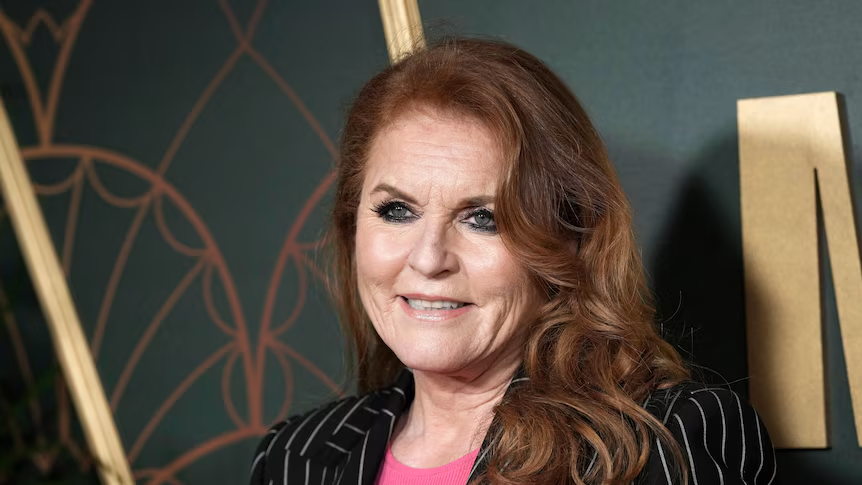
Sarah Ferguson, Duchess of York: Life & Legacy Explained
When you hear the name Sarah Ferguson, Duchess of York, you might picture the vibrant red‑haired royal whose life has unfolded as much in public view as in private introspection. Rarely is a single figure associated with such a mix of glamour, resilience, controversy, creativity, and reinvention. In this article, we explore not just who she is but how her life has shaped her legacy, weaving through royal tradition, media scrutiny, charity work, literary accomplishments, and personal evolution — all in a rich, human narrative.
Early Life and Rise to Royal Prominence
Long before Sarah Ferguson became known worldwide by her formal title, she was Sarah Margaret Ferguson, born on 15 October 1959 in London, England. She grew up in an upper‑class environment with early exposure to aristocratic circles, thanks largely to her father’s work managing Prince Charles’s polo team. Ferguson attended boarding school and later enrolled in secretarial college, just as many young women of her generation did. However, her path would soon diverge from the ordinary.
Her life changed dramatically after being introduced into royal society through mutual connections. In 1985, she reconnected with Prince Andrew, Duke of York, and their whirlwind romance led to a high‑profile wedding at Westminster Abbey on 23 July 1986. She became Sarah Ferguson, Duchess of York, capturing public attention as a modern, relatable member of the British royal family — often nicknamed “Fergie” by the media and admirers alike.
Marriage, Motherhood, and Royal Scrutiny
Marriage to a senior royal placed her under intense public and media scrutiny. The union produced two daughters:
-
Princess Beatrice of York, born 8 August 1988
-
Princess Eugenie of York, born 23 March 1990
While her warmth and approachable persona won some hearts, the spotlight also brought relentless criticism — particularly for her fashion choices, independence, and outspoken nature, which were often unfavourably compared to other royals.
By the early 1990s, the challenges of royal life, long periods apart due to Prince Andrew’s naval career, and mounting tabloid pressure strained their relationship. They separated in 1992 and ultimately divorced in 1996. Yet even decades later, they maintained a complex and often close bond, sometimes living together despite their divorce.
Title, Identity, and Changing Roles
Despite the divorce, Sarah continued to use the title Duchess of York for many years, which reinforced her royal identity in the public eye. However, in October 2025, a notable shift occurred: following Prince Andrew’s decision to relinquish his royal titles amid renewed controversy, Sarah also ceased using the Duchess title, returning simply to Sarah Ferguson in professional and public contexts. This marked a symbolic transition in how she views her life and legacy beyond official royal designations.
Literary and Media Career
If the headlines of her early life focused on royal weddings and lifestyle, the chapters after her divorce tell a very different story — one of a prolific author, media personality, and creative force.
Sarah Ferguson’s writing career is surprisingly extensive. She began publishing books even before her marriage ended, with her children’s book about a freckled helicopter called Budgie gaining popularity. Since then, she has written dozens of volumes across genres:
-
Children’s fiction, including series like Little Red and the Helping Hand series
-
Young adult novels such as The Royal Switch
-
Historical fiction, with works like Her Heart for a Compass and A Most Intriguing Lady
-
Memoirs including My Story (1996) and Finding Sarah: A Duchess’s Journey to Find Herself (2011)
Her memoirs, in particular, offered readers a candid look at the pressures of life in the royal family, and her subsequent journey toward self‑discovery — a theme that resonates with many who seek meaning beyond public titles.
Philanthropy and Advocacy
Beyond literature and media, Sarah Ferguson, Duchess of York carved a meaningful role in philanthropy. She championed numerous causes, using her platforms to support children, cancer patients, and vulnerable communities. She served for decades as a patron of the Teenage Cancer Trust and founded charities like Children in Crisis and Sarah’s Trust, which focused on pandemic relief and aid for people in need.
Her advocacy often centered on empathy and opportunity — values that animated her public persona. She worked tirelessly to bring attention to educational access, health challenges faced by families, and resources for children around the world. Her influence in charitable circles was significant and built not merely on title, but on long‑term commitment.
However, her philanthropic legacy faced turbulence in 2025 when revelations about a controversial email referencing convicted sex offender Jeffrey Epstein led multiple charities to cut ties with her as patron. This development, while challenging, sparked wider conversation about accountability, reputation, and the fragile intersection of public life and personal choices.
Personal Struggles and Resilience
Few public figures embody resilience quite like Sarah Ferguson. Her life has taken her from palace corridors to media storms, from financial struggles post‑divorce to global stages where she presented books, hosted interviews, and shared her narrative with honesty. Moreover, she faced significant health battles; in 2023, she underwent treatment and surgery for breast cancer, a journey she discussed publicly with candour and determination. This openness endeared her to fans and underscored her depth beyond headlines.
Throughout these personal trials — media scrutiny, health challenges, and shifts in her relationship with the royal family — she has maintained a spirit of reinvention and self‑reflection that many admire.
Legacy as a Modern Royal Figure
When people talk about Sarah Ferguson, Duchess of York, the conversation often turns to three intertwined themes: royal history, personal reinvention, and enduring influence.
Royal History
Her position as Duchess, her marriage into the British royal family, and her role in raising the next generation of royals situate her firmly within modern monarchy’s evolving narrative. She witnessed royal traditions, tracked generational shifts, and stood at the intersection of tradition and change.
Personal Reinvention
Ferguson’s life post‑divorce showcases a remarkable reinvention. Rather than fading into obscurity, she embraced authorship, advocacy, media presence, and public dialogue about issues close to her heart. Her literary portfolio reflects both creativity and empathy, drawing readers across age groups and interests.
Enduring Influence
Despite scandals and scrutiny, her impact persists. She remains a figure of curiosity, empathy, and inspiration for many who see her as someone who navigates life’s highs and lows with vulnerability and determination. Her candid discussions about health challenges and personal growth created a connection with audiences well beyond royal watchers.
Key Takeaways: Who Is Sarah Ferguson?
-
She is a woman of many roles: royal, author, advocate, mother, and public personality.
-
Her life spans royal weddings and global stages, literary success and heartfelt philanthropy.
-
She faced controversy but continually sought reinvention and purpose.
-
Even after relinquishing titles, her name endures as a marker of influence and resilience.
In summary, Sarah Ferguson, Duchess of York represents a compelling blend of historical significance and modern humanity. Her legacy is not just in the titles she once bore, but in the stories she has written — both on paper and through her own lived experience.
Conclusion: More Than a Duchess
In the tapestry of British royalty and public life, Sarah Ferguson, Duchess of York stands out as a richly layered figure. She is not defined solely by marriage, scandal, or charity work, but by a continuous thread of growth, struggle, creativity, and reinvention. Whether you admire her novels, respect her charity efforts, or simply reflect on her journey through the spotlight, her life offers lessons about identity, resilience, and the complexity of legacy.
If this exploration of Sarah Ferguson’s life and legacy resonated with you, please share your thoughts in the comments — what aspect of her journey do you find most enduring or inspiring?